


Iceland
- The Wanderers

- Mar 15, 2018
- 2 min read

A sparsely-populated North Atlantic island, Iceland is famous for its hot springs, geysers and active volcanoes. Lava fields cover much of the land and hot water is pumped from under the ground to supply much of the country's heating.No surprises here, but Iceland is a cold country. Very cold. July and August are the best time to visit because you’ll have ample sunshine and fairly good weather. There’s no better way to explore Iceland than by driving the Ring Road, a.k.a. Route 1, that circles the entire island. Spanning 828 miles (1332 km), this route is one of world’s top road trips and it will show you the best of the island.
Weave your way through rolling hills where Icelandic horses roam, past jagged cliffs with gushing waterfalls, and snake alongside sapphire blue rivers. Every turn of the road reveals new landscapes that will keep the entire journey exciting. This trip was one of my favourites because I not only did a Road Trip for the first time but I also stayed in a hostel for the first time which was a wonderful experience. Places to Visit In Iceland I would recommend to skip The Blue Lagoon which was very expensive and crowded and I did not understand what the hype was all about and instead go to Mývatn Nature Baths which is relatively cheaper and less busy.

You can’t come to Iceland and not visit The Golden Circle which is a loop that passes through Iceland’s most famous trio and is just a short two-hour drive from Reykjavík.

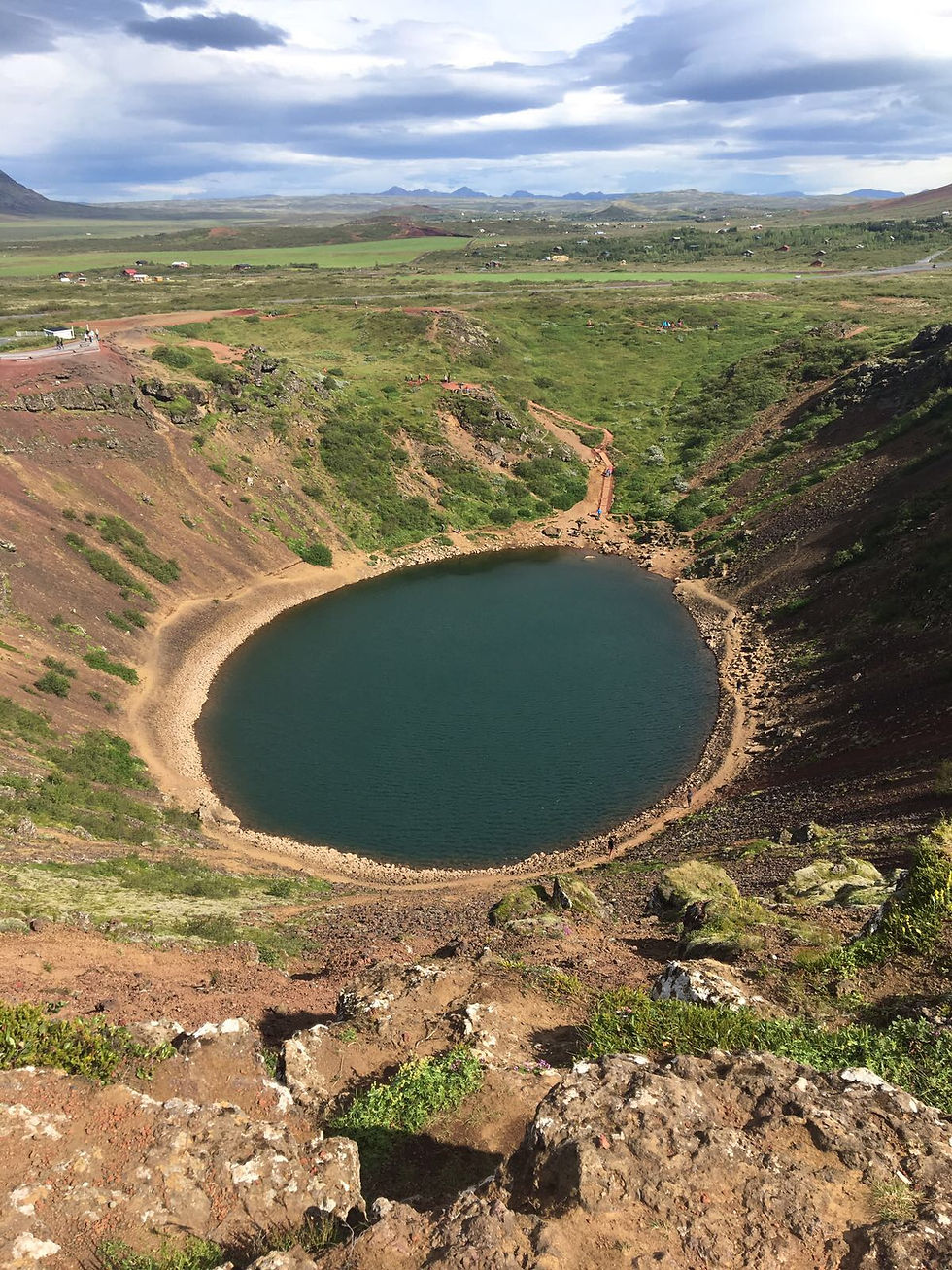
Gullfoss is Europe’s largest waterfall. There are a few trails that lead all the way to the roaring falls: we parked at the bottom carpark which was closer to the lower section of the falls. You’ll get wet if you walk to the edge of the falls, so a waterproof jacket and pants are recommended. The Kerið Crater Lake spots spectacular sapphire-colorer waters inside a volcano caldera covered in red volcanic rock and rich green moss.
Seljalandsfoss and Skogafoss, both waterfalls are 200 feet tall and are some of the most spectacular in Iceland. Jökulsárlón Glacier Lagoon was filled with plenty of floating ice, in all shapes and sizes, and different shades of blue.

Hverir Geothermal Area - It didn’t take long to reach the Myvatn Lake area in northern Iceland. As soon as we saw the black volcanic rock and massive ash fields, we knew we were in the geothermal area famous for its hot springs and mud pits.

Driving into Akureyri felt like we were back in urban Iceland. This is the second biggest city in Iceland and the capital of the north. On our drive to Akureyri, we made a quick stop at Godafoss, translated to mean “Waterfall of the Gods”.
Comments